
Lumina Vision Rehabilitation was founded to fill a specific gap: specialized occupational therapy for people living with vision loss, delivered where independence actually happens — at home.
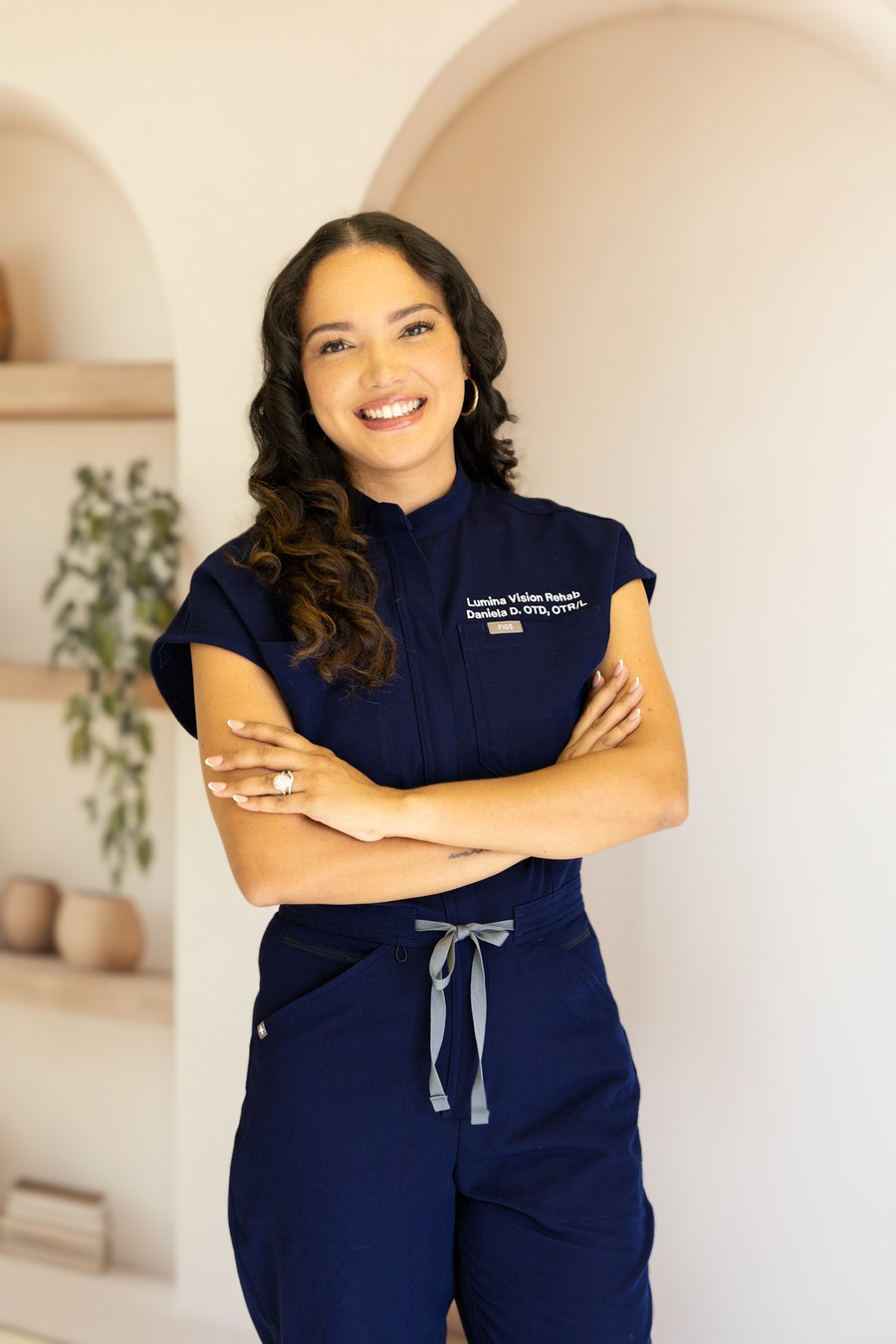
Daniela's path to low vision rehabilitation began long before Lumina existed. With six years of experience in ophthalmology as an ophthalmic medical assistant and scribe, she worked alongside eye-care professionals and gained firsthand experience with people living with macular degeneration, glaucoma, diabetic retinopathy, retinal detachments, cataracts, and other causes of vision impairment.
That experience gave her a deep appreciation for the complexity of vision — and for something a diagnosis alone doesn't capture. Vision loss can change how someone cooks a meal, manages medication, gets dressed, navigates their home, reads, and feels about their ability to remain independent.
Daniela pursued her Doctorate in Occupational Therapy at Emory & Henry University, which let her approach vision from a different angle — not only "what can this person see?" but "what does this person need and want to be able to do?" She is currently continuing her specialization in low vision rehabilitation through the University of Alabama at Birmingham (UAB), pursuing further certificate training in the field.
Lumina was founded on the belief that people living with vision loss deserve more than a diagnosis and a list of limitations. They deserve practical strategies, individualized support, and the chance to keep doing the things that give their lives meaning.
Through in-home occupational therapy, Daniela works with people in the environments where their challenges actually occur — identifying barriers, building new strategies, introducing adaptive tools, improving safety, and finding ways to participate more fully in daily life.
The goal isn't simply to change what someone sees. It's to help change what they believe is still possible.
The goal isn't a clinical benchmark — it's whether you can safely make coffee, read a pill bottle, or navigate your own hallway.
Skills are practiced in the environment where they'll actually be used, with the lighting, layout, and routines that are really yours.
Safety matters, but so does dignity. Lumina's approach aims for both — confidence to keep doing what you value, not just avoiding harm.
A consultation is a low-pressure first step to see whether Lumina is the right fit.